Design is fundamentally about two things. Just two things.
Humans, and their experiences.
Everything we do as designers, regardless of what form of the craft we practice, digital or physical, can be reduced to just these two things. It might be a tad reductionist, but we'd find it hard to argue there's a more foundational baseline for the practice that is design, than this.
And yet, with just a literal couple of things to keep track of, we seem to be losing sight of one of them.
Where are the humans?
Where, in this landscape that seems to fervently hurl itself into a future driven by artificial intelligences, are the humans? The focus has seemingly shifted away from the person at the receiving end of the experience. And we're heading towards an environment wherein we craft and tailor experiences without considering who's actually engaging with them. If anyone is, at all.
Modern design has an empathy crisis.
Abstractions, and reductions
It's tempting to pin our collective loss of focus on the artificial intelligence boom. The AI surge is buzzy and convenient to blame, but it isn't the only culprit.
Long before ChatGPT, we had a habit that undermines our connection with users: reductive research.
Very early on in my now well over a decade long career, the idea of a persona was dogmatically instilled into my young designer brain. It's impossible, after all, to design for all users. Or so I was told, repeatedly, and so I believed.
So what we do instead, is we take a handful of users, and attempt to identify a common set of traits among some of them. Then we take those common traits, draw a box around some subset of them, and another box around the remainder. And ba-da-bing ba-da-boom. We've got ourselves a set of personas.
This is then the point where we pretend to have majored in Statistics, and declare that it is statistically likely for the majority of users to fall within either of these buckets. And the ones that don't are outliers. We don't care about outliers.
But none of this tells us anything about the human that this is supposed to be describing. We're already several levels deep into abstracting the person who's supposed to be benefiting from our work at this point. Not humans or people, but "users". And not just any users. No. Predefined, shoved-into-a box-that-meets-our-business-goals personas.
Let's take my dad for example. My dad is male. A white male. Retirement-aged. Likes to work on computers in his spare time. Supposedly enjoys spending time with his children. Donates to charity where he can.
Easy fit for a persona one might think. We can probably dig a little deeper to define it further, but we've got a good start. A decent amount of information to draw haphazard conclusions from, and present them to our executive stakeholders, showing them we know exactly who our users are, and what they want.
Or is it?
Because that persona just as well describes Bill Gates as it does my dad. And yet I've worked in many a product development environment where that doesn't matter. It's enough to base our decisions off of and move forward. Despite the fact that my dad and Bill Gates could not be more different in practice.

Because we can't stem the flow of features. We can't afford to spend time asking ourselves who we're actually designing for. That's not our job anymore.
Because there's no empathy. We don't care for the human side of the experience. There's only abstractions and reductions. Traits and attributes carefully distilled to fit an existing mold.
Personas aren't inherently harmful. But the moment we allow them to stand in for real people, we give ourselves permission to stop listening.
Artificial intelligence notwithstanding, we've been trained to do this. To not care. To design for the masses. For uniformity. Which is exactly why we believe this path we're going down is so perilous.
The ghost in the machine
Anyone who has spent any amount of time on social networks, online forums, or other forms of online social engagements, has likely noticed a disturbing trend. An increasingly large number of replies, or even topics, wasn't authored by a human at all.
LinkedIn might currently be the most egregious example of this. A post that gains any amount of traction at all, is soon swarmed by bots pretending to be a real user. They'll jump into the replies and neatly summarize the key points of the post, before complimenting with a series of loosely cohesive adjectives.
And then another bot might reply to the first bot, who in turn replies to said reply. And so forth.
While these forms of "fake" communication and engagement are often still called out, the inflection point where bot-generated content and real user content are indistinguishable, draws ever closer. Which again, begs the question:
Where are the humans?
The tools that provide the foundation for these types of interactions don't care for the end-consumer. Not end-user, mind you, because that would be the person allowing the bot to write content on their behalf. No, the end-consumer is the person on the receiving end of the probabilistic calculation of nouns and adjectives.
No exit
It isn't just social media platforms that suffer from the disappearance of humans either. Whereas the blame for this can to some degree be laid at the feet of users on these platforms, it's a far too common occurence nowadays to see companies, from startups to megacorporations, eschewing this human connection, in favor of a more mechanical replacement.
Recently, I had the pleasure of needing to track down a package that was supposed to be delivered to me. Something I'm sure a larger number of our dear readers are all too familiar with. Now, call me old-fashioned, but I still believe that sometimes, a single phone call is all you need.
Not so much in this case.
You see, the not-to-be-mentioned carrier that was delivering my packages with their yellow-and-red livery, had opted to replace what seemed to be their entire customer service with a voice-activated directory. Not the ones I encountered many times in the past, where you enter a specific series of numbers to narrow down your query.
This was entirely dictated by myself speaking to a computer-generated script. And it did not work. At all.
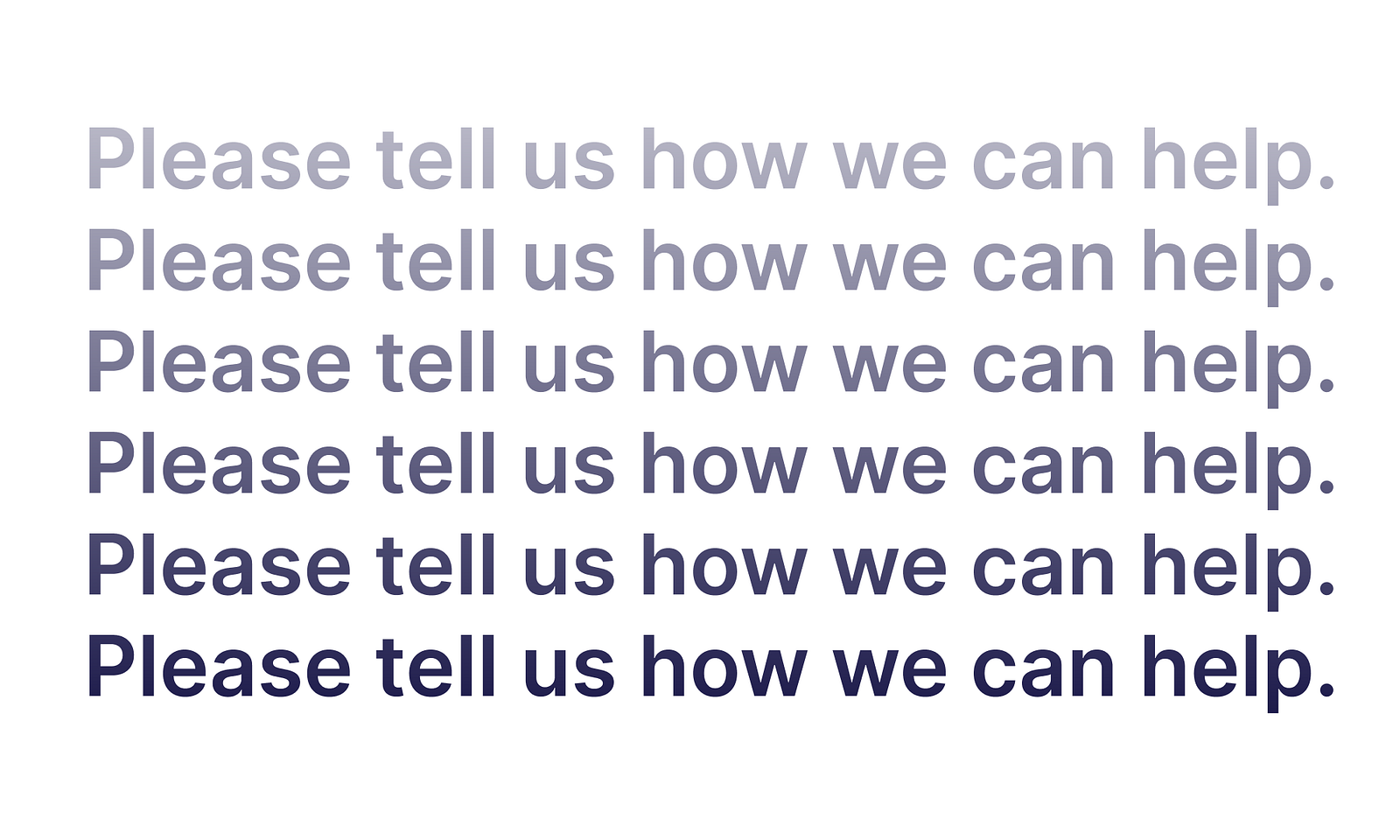
"Could you repeat that?", "I'm sorry, I didn't catch that", and the phrase repeated ad infinitum that now haunts me, "Please tell us how we can help", formed 90% of the conversation. Not counting the immense frustration on my end that built up over the course of the call. If one can even really call it that.
At no point, was I offered a way out. An opportunity to speak to a real, live human being. Someone who understood what I was trying to communicate without the confines of their narrowly-defined script. A person to whom "detail" was an actual word in their accepted vocabulary.
I ended up driving to the nearest office location of the carrier, some one-and-a-half hours one way, in order to find out what had happened to my delivery. Because it was easier for the organization to place the onus of getting a delivery on me, rather than for them to actually offer a complete, end-to-end service.
A way out, and forward
All is not lost, but getting back what we've given up will take deliberate effort.
We have no shortage of frameworks or methodologies. We've just grown comfortable designing at a distance, behind abstractions and dashboards, far away from the people who live with the consequences of our decisions.
The way forward starts with getting closer. Focus groups, surveys, and personas refined within an inch of their lives won't get us there. Actual conversations with actual people will: unscripted, uncomfortable, occasionally inconvenient conversations that resist neat categorization. They rarely map to a feature request or a KPI, but they show you what motivates and frustrates people, and where they contradict themselves.
This kind of qualitative research isn't efficient and doesn't scale cleanly. Neither does empathy, which has only ever passed from one person to another through attention and care. When we trade that away for velocity, we shouldn't be surprised when the results feel hollow.
Designers don't have to do this alone. Some of the best sources of human understanding already sit inside our organizations, mostly ignored: sales teams, account managers, support staff, people whose whole job is building real relationships with customers. They know the stories and the details behind our segments and averages. They know why a customer hesitates, what they're afraid of, and what finally gets them to trust you.
And yet, we rarely listen.
Instead we favor artifacts and metrics over the people behind them. We optimize funnels while eroding trust, then wonder why our products feel cold and interchangeable.
Bringing the human back into design doesn't require rejecting technology. It requires refusing to let technology set the terms: designing systems that leave room for exceptions, for failure, for a conversation, and for a way out. On the other side of every interface and every "user" is a person who never agreed to be reduced.
Whether design gets better from here depends less on artificial intelligence, automation, or scale than on whether we choose to care, to listen, and to design with humans instead of only for them. If we can no longer answer the question "Where are the humans?", the problem is us.